History
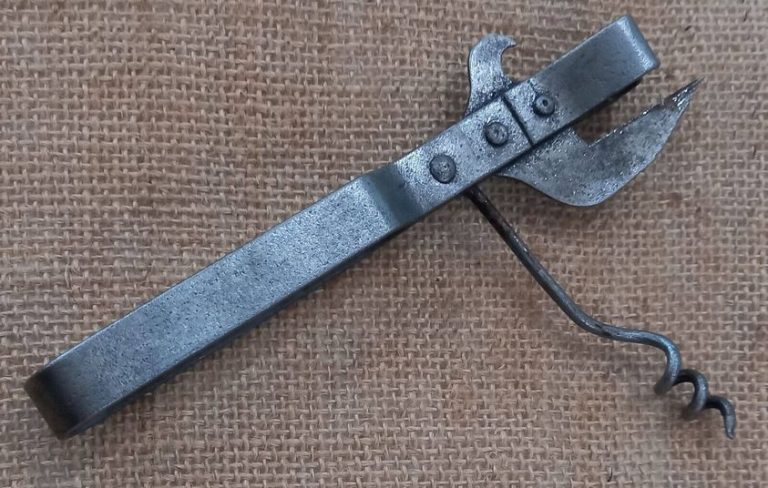
The tin can opener, an essential tool for accessing canned goods, has a rich history dating back to the 19th century. Canned food was first introduced in the early 1800s, following the development of canning techniques by Nicolas Appert, a French chef. While the method of preserving food in sealed cans was revolutionary, the initial challenge was how to open these sturdy containers. The first cans were nearly impenetrable, requiring a hammer and chisel to open, making the process laborious and impractical.
The solution came in 1858 when Ezra Warner, an American inventor, patented the first practical can opener. Warner’s design featured a serrated blade that cut through the can’s lid, significantly simplifying the process. This early model was a considerable improvement over the previous methods and laid the foundation for future developments. Over the following decades, various improvements were made, including the introduction of the rotary can opener in 1925 by John Oster, which used a rotating blade to slice through the lid more efficiently.
Usage
Vintage tin can openers were designed for durability and efficiency. The early manual models, including the can opener invented by Warner, were typically made of heavy-duty metal and required a considerable amount of manual effort to operate. Users would place the serrated blade on the can’s lid and turn a handle or rotate a crank to cut through the metal.
The rotary can opener, a more refined tool, featured a more streamlined design. Users would clamp the opener onto the can, turn a handle to rotate the blade, and cut through the lid with relative ease. This design not only improved the efficiency of opening cans but also made the process safer, reducing the risk of sharp edges and accidental cuts.
Vintage can openers were indispensable in both home kitchens and professional settings. They were commonly used in households, restaurants, and even military and industrial kitchens. Despite their simplicity, they were remarkably effective and continued to be used well into the 20th century.
Legacy
The legacy of the vintage tin can opener is evident in its enduring design and impact on culinary history. While modern electric can openers and more sophisticated models have largely replaced vintage manual can openers, the latter remain cherished artifacts of kitchen history. Collectors and enthusiasts appreciate these vintage tools not only for their functionality but also for their craftsmanship and historical significance.
Vintage can openers are often featured in antique collections and kitchen museums, reflecting their role in transforming food preparation and preservation. Their design innovations paved the way for more advanced tools, and their robust construction exemplifies the durability and ingenuity of early 20th-century engineering.
In addition to their practical applications, vintage can openers symbolize a period of culinary evolution and technological progress. They remind us of the simple yet profound innovations that have shaped modern cooking and food storage, celebrating the enduring legacy of these once-essential kitchen tools.
