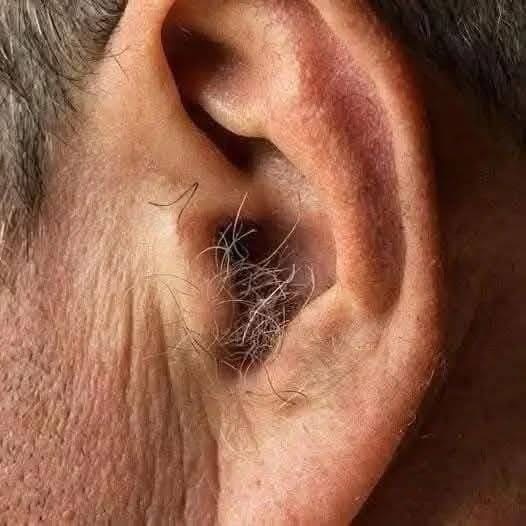
Did you know that hair growing on your ears is a completely normal part of aging? Many people notice it suddenly after fifty or sixty and immediately worry that something is wrong. Others joke about it, hide it, or feel embarrassed. The truth is far simpler: ear hair reflects normal hormonal and genetic changes over time—not illness or decline.
As we age, our bodies do not change uniformly. Hair may thin on the scalp while growing thicker in areas like the ears, nose, or eyebrows. This happens because hair follicles respond differently to hormones over decades. Androgens, such as testosterone and dihydrotestosterone (DHT), influence growth depending on the location. Men are more likely to develop prominent ear hair, though women may notice it after menopause when estrogen levels drop. Genetics also play a role, determining hair density, thickness, and growth patterns.
Ear hair once had practical purposes: trapping dust, keeping insects out, and protecting the ear canal. Over time, growth becomes more visible, but this is simply the body continuing its natural functions. Many myths surround ear hair, including claims that it signals poor circulation, organ disease, or hormonal imbalance. None of these are true. Hair does not grow back thicker after trimming, either; blunt ends just create that visual illusion.
Grooming is optional and should be done safely, using small trimmers or rounded scissors. Avoid plucking deep hairs or using sharp tools in the ear canal. Ear hair is not a flaw—it is a normal, visible sign of aging, a reminder that your body has lived, adapted, and endured. Understanding this helps replace embarrassment with acceptance and reframes aging as a natural, dignified process.
In short: if hair grows on your ears, it’s simply your body aging normally. There is nothing to fear, nothing to hide, and nothing wrong—just time passing naturally.
