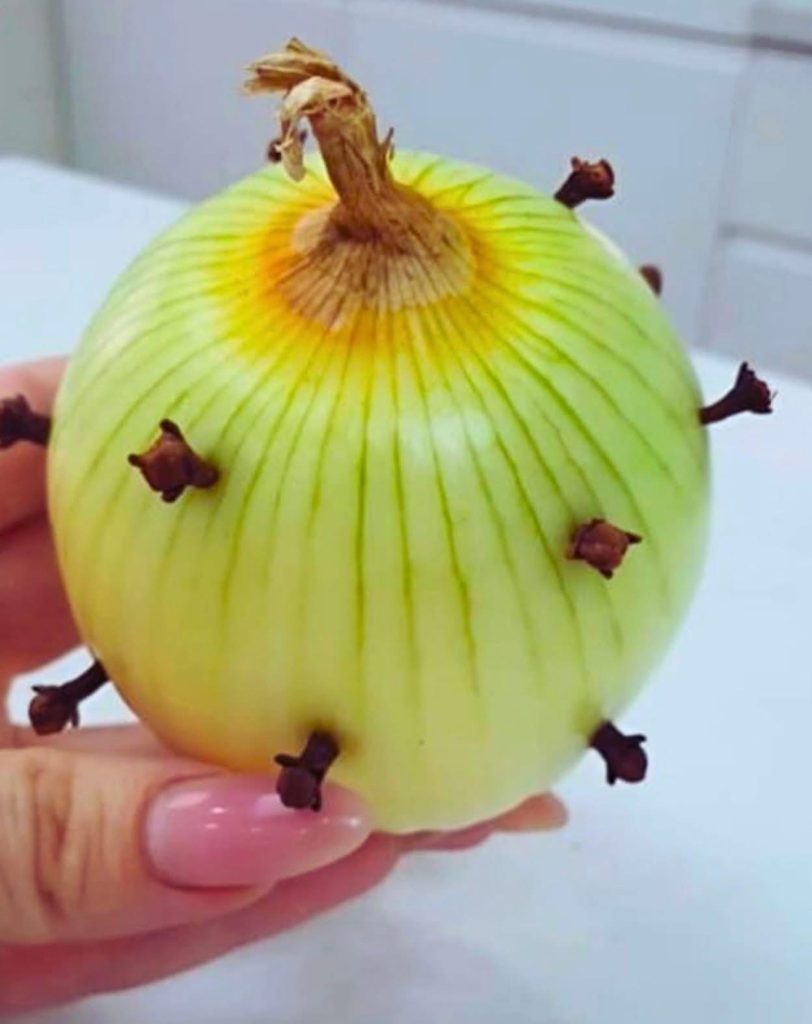
The combination of onions and cloves is not only useful in cooking but can also serve as an effective natural remedy to keep unwanted insects out of the house. This practice has been used for generations in various cultures to repel pests such as flies, mosquitoes, and other flying insects. Below, we explain how this simple mixture can become an effective and eco-friendly alternative to traditional chemical repellents.
Properties of Onions and Cloves
Onions are well known for their natural ability to repel insects. This is due to the sulfur compounds present in their structure, which release an odor that insects find unpleasant. Additionally, onions contain essential oils that, once released, enhance their repellent effect against various pests.
On the other hand, cloves—a spice widely used in cooking—contain a compound called eugenol. This component is known for its natural insecticidal properties, as it acts as a powerful repellent. Moreover, eugenol has antiseptic and anti-inflammatory properties, adding extra value in terms of its healing benefits.
Creating this homemade repellent is very simple and requires no complicated ingredients. Just follow these steps:
Take an onion and cut it in half.
Insert several cloves into the exposed flesh of the onion, ensuring they are firmly in place.
Place the onion halves in strategic areas of your home, such as near windows, doors, or any space where you frequently notice the presence of insects.
How Does This Natural Repellent Work?
The combination of onions and cloves works by creating an unpleasant olfactory barrier for insects. The strong scent of cloves, combined with the sulfur compounds in onions, creates an atmosphere that effectively repels pests. Unlike chemical repellents, which can be harmful to human and animal health, this natural solution is not only safe but also completely toxin-free.
This simple and cost-effective trick is ideal for those looking for an eco-friendly alternative to keep their home pest-free all year round. By using onions and cloves, you avoid harsh chemicals while enjoying a healthier, pesticide-free environment.
In conclusion, onions and cloves are a powerful and natural combination to keep insects away from your home. Their effectiveness, accessibility, and safety make this homemade remedy an attractive and reliable option for those seeking a simple yet efficient solution to household pest problems.
