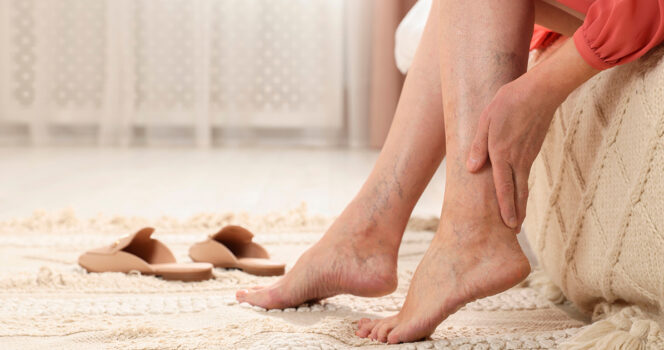
Have you ever noticed thin, web-like veins or bulging, twisted veins on someone’s legs? Or maybe you’ve seen them creeping up your own body? Spider and varicose veins affect millions of people and while they might seem like just a cosmetic issue, they can have a much bigger impact than you think.
Ladies, if you’ve noticed spider veins or varicose veins creeping up on your legs, you’re not alone! 40% of adult women will develop these pesky veins, thanks to a mix of hormones, genetics, and lifestyle factors.
But men, venous disease is not exclusive to women.
If these pesky veins are making an appearance on your body, don’t worry! Understanding what causes them and how to manage them can help keep your legs feeling and looking their best.
Varicose veins
The Cleveland Clinic describes varicose veins as “swollen, engorged blood vessels that bulge just under your skin’s surface. These blue or purple bulges usually appear in your legs, feet and ankles. They can be painful or itchy.”
For most people, varicose veins are more of a cosmetic nuisance than a serious health issue. But in some cases, leaving them untreated can lead to complications like skin discoloration, inflammation, bleeding, or even painful ulcers (open sores).
In more severe cases, varicose veins might be a sign of chronic venous insufficiency (CVI) – a condition where the veins struggle to send blood back to the heart. This can increase the risk of blood clots, which is why it’s always a good idea to talk to your doctor about any varicose veins you notice.
Key characteristics:
- Thick, bulging, rope-like veins
- Often accompanied by pain, itching, or swelling
- Can cause leg fatigue and heaviness
- Mostly found on legs
Spider veins
Spider veins aren’t actually veins at all – they’re tiny, damaged capillaries, venules, and arterioles, that appear as red, blue, or purple lines just under the skin’s surface.
Resembling a spider’s web or tree, spider veins are usually found on the legs and face and are caused by weakened blood vessels.
According to the Cleveland Clinic, “spider veins are typically harmless. They only need treatment if you don’t like the way they look. Treatment is often successful in getting rid of them.”
The clinic warns that “you may also want to make lifestyle changes to help keep new ones from forming.”
Key characteristics:
- Thin, thread-like veins
- Usually painless
- Common on legs and face
- Caused by poor circulation and weak vein walls
Possible causes
Several factors can contribute to the development of spider veins and varicose veins.
Genetics: If your parents or grandparents have them, there’s a higher chance you’ll develop them too.
Prolonged standing or sitting: Jobs that require long hours of standing (like nurses, teachers, and retail workers) or sitting (such as office jobs) can contribute to poor circulation, increasing vein problems.
Hormonal changes: Pregnancy, menopause, and birth control pills can affect hormone levels, leading to weakened vein walls.
Age: As we get older, our veins lose elasticity, and blood flow efficiency decreases.
Obesity: Extra weight puts more pressure on veins, making it harder for blood to circulate properly.
Lack of exercise: A sedentary lifestyle contributes to poor circulation, which can cause blood to pool in the legs.
Sun Exposure: Excessive sun exposure can weaken blood vessels, especially on the face.
Exercises to help spider and varicose veins
Exercise is one of the best natural ways to improve blood circulation, strengthen veins, and reduce discomfort. Here are seven simple yet effective exercises that you can try.
Leg elevation
- Lie on your back and elevate your legs against a wall or on a pillow.
- Hold the position for 10-15 minutes to encourage blood flow back to the heart.
This exercise reduces swelling and prevents blood from pooling in the veins.
Calf raises
- Stand with your feet hip-width apart.
- Slowly lift your heels until you’re on your tiptoes.
- Lower back down and repeat 15-20 times.
This movement strengthens calf muscles, which pumps blood efficiently through the veins.
Ankle rotations
- Sit on a chair and lift one foot off the floor.
- Rotate your ankle in circles 10 times clockwise, then 10 times counterclockwise.
- Switch legs and repeat.
This exercise is great for desk workers! It improves circulation and prevents blood stagnation when sitting for long periods.
Walking
- Walk for at least 30 minutes daily at a moderate pace.
Walking engages your leg muscles, keeping blood moving and veins strong.
Leg lifts
- Lie on your back with your legs extended.
- Lift one leg up, hold for five seconds, then lower it.
- Repeat 10 times per leg.
Leg lifts strengthen leg muscles and helps prevent blood pooling in veins.
Swimming
- Swim for 20-30 minutes at a relaxed pace.
Water reduces pressure on veins while encouraging blood circulation.
Yoga
- Try poses like legs up the wall, shoulder stand, or downward dog.
- Hold each pose for 30 seconds to one minute.
Yoga improves circulation, reduces swelling, and strengthens veins.
Spider veins and varicose veins may be common, but they don’t have to take over your life! By understanding the causes and incorporating simple exercises into your routine, you can keep your veins strong and healthy.
What’s your secret to reducing or preventing varicose or spider veins? Please share your tricks with us in the comments section below!
