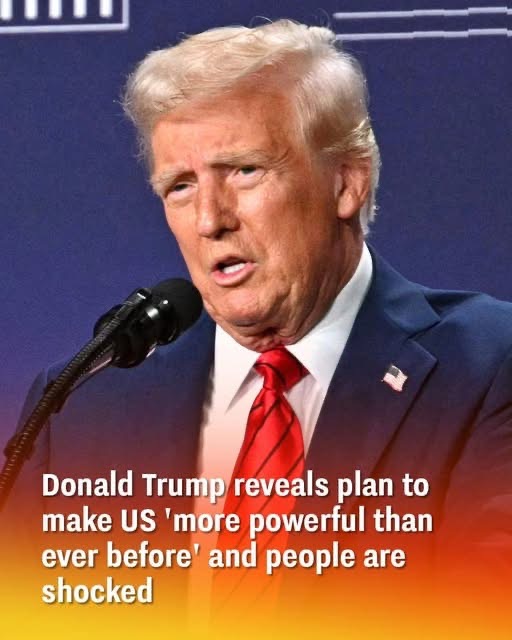
For nearly a decade, former President Donald Trump has championed the slogan “Make America Great Again,” focusing on economic policies that he believes will restore the nation’s financial strength and global dominance. One of his key proposals is the implementation of aggressive tariffs, which he claims will make the U.S. “richer than ever before.”
During a recent speech at the House GOP retreat at Trump National Doral in Miami, Florida, the 78-year-old former president laid out his economic vision, emphasizing a return to protectionist trade policies. His remarks have sparked widespread discussion, with both supporters and critics analyzing the potential impact of his proposed economic strategy.
The Historical Justification for Tariffs
In his speech, Trump referenced the period between 1870 and 1913, a time when tariffs were the primary source of government revenue in the U.S. and when, according to him, the country experienced its richest economic growth relative to global standards.
“Do you know the United States, in 1870 to 1913, all tariffs—and that was the richest period in the history of the United States, relatively speaking?” Trump asked his audience. He further highlighted the Tariff Commission of 1887, which was created to decide what to do with the vast revenue collected from tariffs. According to Trump, the wealth generated from these tariffs was so immense that the government struggled to determine how to allocate the funds.
Trump also credited former President William McKinley for implementing protectionist policies that led to economic growth, claiming that after McKinley’s assassination, Theodore Roosevelt inherited a massive budget surplus that enabled the expansion of national parks and infrastructure.
What Are Tariffs and How Do They Work?
To understand Trump’s proposal, it’s essential to break down what tariffs are and how they function in an economy.
A tariff is a tax imposed on imported goods. When a foreign-made product enters the U.S., the importer must pay a tax to the government. This tax increases the cost of imported goods, making them less competitive compared to domestically produced items. Tariffs serve multiple purposes, including:
Protecting domestic industries by making foreign products more expensive, thus encouraging consumers to buy American-made goods.
Generating government revenue without the need for direct taxation on citizens.
Addressing trade imbalances by discouraging imports and promoting exports.
However, tariffs also come with risks, such as increased prices for consumers, potential retaliation from trade partners, and the possibility of trade wars.
Trump’s Vision: Eliminating Federal Income Tax and Replacing It With Tariffs
One of the most striking aspects of Trump’s plan is his suggestion that tariffs could replace federal income taxes. If implemented, this would mark a dramatic shift in the way the U.S. government generates revenue.
“As I said in my speech last week, instead of taxing our citizens to enrich foreign nations, we should be tariffing and taxing foreign nations to enrich our citizens. Does that make sense? Right?” Trump declared.
The idea of eliminating federal income taxes is appealing to many Americans. The current tax system requires working individuals to pay a portion of their earnings to the government, whereas a tariff-based revenue model would shift this burden onto foreign producers and importers.
Potential Impact of Trump’s Tariff Plan
While Trump’s proposal has generated enthusiasm among his supporters, economic experts warn of the potential drawbacks of a heavy reliance on tariffs. Here are some of the key concerns:
1. Increased Costs for Consumers
If foreign goods are taxed at higher rates, businesses that rely on imported materials may pass those costs onto consumers. This could result in higher prices for everyday items, from electronics and automobiles to clothing and household goods.
2. Retaliatory Trade Policies from Other Nations
Historically, when a country imposes tariffs on imports, trade partners often retaliate with their own tariffs. For example, during Trump’s presidency, China responded to U.S. tariffs by imposing taxes on American agricultural products, harming U.S. farmers who relied on exports.
3. Impact on International Relations
A tariff-heavy policy could strain diplomatic relations with key U.S. allies. Countries in the European Union, Canada, and Mexico may view such policies as economic aggression, potentially leading to tensions in trade agreements and alliances.
4. Mixed Economic Growth Outcomes
Protectionist policies have historically had mixed results. While some industries may benefit from reduced competition, others that depend on global supply chains could struggle. The long-term impact on overall economic growth remains uncertain.
Public Reaction to Trump’s Proposal
Following Trump’s speech, reactions on social media were divided. Some Americans expressed excitement about the prospect of lower income taxes, while others worried about rising consumer prices and potential economic instability.
One social media user commented, “Not a huge fan of him, but reducing or completely canceling the income tax would make a huge difference to us.”
Another wrote, “American citizens shouldn’t pay; we should tariff all of other countries who have used our economy as a piggy bank.”
However, critics pointed out that increased tariffs could disproportionately affect lower-income Americans, who spend a higher percentage of their earnings on goods that may see price hikes.
The Future of Tariff Policy in the U.S.
As the 2024 presidential election approaches, Trump’s economic policies will likely be a major topic of debate. If he secures another term, his tariff plan could redefine U.S. trade policy for years to come.
In contrast, his political opponents argue for maintaining lower tariffs and seeking multilateral trade agreements to foster economic growth and international cooperation.
Conclusion
Donald Trump’s proposed tariff strategy is a bold attempt to reshape America’s economy by returning to protectionist policies of the past. While the idea of eliminating federal income taxes is appealing to many, the potential consequences—such as higher consumer prices and strained international relations—cannot be overlooked.
As the political landscape evolves, American voters will have to weigh the benefits and risks of such a dramatic economic shift. Regardless of the outcome, Trump’s push for aggressive tariffs has reignited a national discussion on how best to ensure economic prosperity for future generations.
