I highly doubt that the post will be read carefully or shared, but I will still make it.
Of course, if the post were filled with cats or dogs, which most of us love and care for, then our appreciation and outrage would be overflowing.
But the post does not contain any nude pictures.
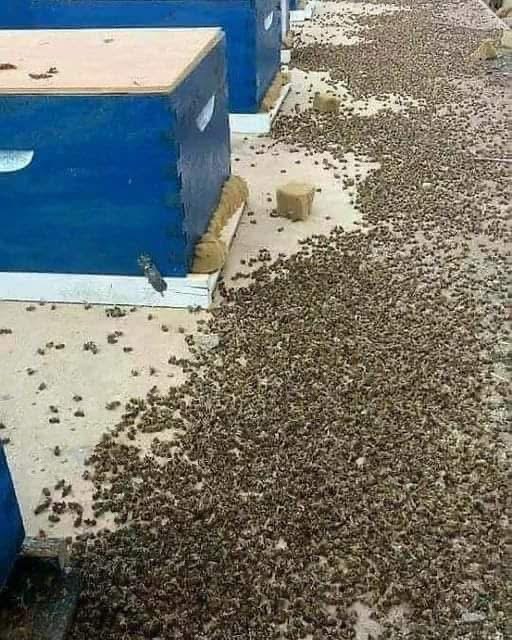
Unfortunately, here we have thousands of dead bees, affected by the use of pesticides in our country. Unfortunately, our life cycle stops somewhere here.
If bees disappear from the face of the Earth one day, we humans will not have more than 4 years of life left…
Why are bees the most important living beings on Earth?
We all know the colossal importance of bees in our daily lives, and we have enjoyed the extraordinary properties of bee products since childhood. Here are the conclusions of studies conducted regarding their existence:
The Earthwatch Institute concluded in the latest Royal Geographic Society debate in London that bees are the most important living beings on the planet. However, along with this news, scientists also made an announcement: bees are now classified as insects at high risk of extinction.
“IF BEES WERE TO DISAPPEAR, HUMANITY WOULD SURVIVE FOR ONLY 4 YEARS, AT MOST.”
-Albert Einstein
Bees worldwide have disappeared by up to 90%, according to recent studies, with reasons varying by region. Among the main causes are massive deforestation, the lack of safe nesting places, the lack of flowers, uncontrolled use of pesticides, changes in soil, and a decreasing number of beekeepers.
Over 70% of the world’s agriculture depends on these insects, and it can be said that 70 out of 100 foods we consume are due to the pollination process carried out by bees.
Moreover, the pollination performed by bees is essential for plant reproduction, which is the main source of food for millions of animals. Without it, the fauna would gradually begin to disappear.
Are there solutions to this problem?
There are indeed solutions, but they are challenging to implement in today’s society, given the harmful practices in Romanian production and agriculture.
Nevertheless, a few solutions have been proposed by specialists, with the hope of being implemented as soon as possible:
Banning, not just reducing the use of toxic pesticides. The shift towards using pesticides that have no negative impact on pollinators is suggested.
Promoting completely natural agricultural alternatives.
Conducting constant research and monitoring of bee health, well-being, and conservation.
Promoting programs that give the population a chance to join the bee-saving process by supporting beekeepers, such as purchasing natural honey or getting involved in national projects like “Adopt a Hive.” You can participate in such a project through the initiative…
