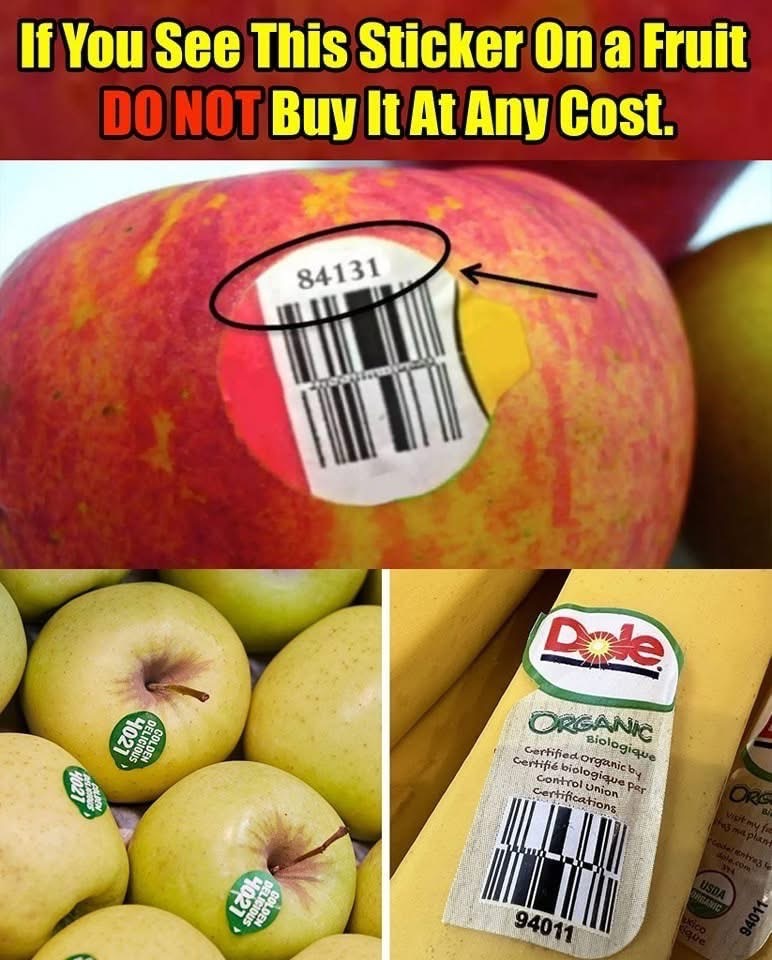
When you pick up a piece of fruit at the grocery store, chances are it has a small sticker on it with a number. These numbers aren’t just for scanning prices—they hold valuable information about how the fruit was grown. Known as PLU (Price Look-Up) codes, these numbers provide insights into whether the fruit was grown conventionally, organically, or even genetically modified. Here’s what those numbers really mean:
1. Four-Digit Codes Starting with a “3” or “4” – Conventionally Grown Produce
If the PLU code on a fruit has four digits and starts with a “3” or “4,” it means the fruit was grown conventionally. This indicates that the fruit may have been grown using chemical fertilizers and pesticides, which are common in large-scale farming.
For example:
A banana with the code 4011 was grown conventionally.
A Fuji apple with the code 4131 is also conventionally grown.
While conventionally grown produce is generally safe to eat, washing it thoroughly can help remove pesticide residues.
2. Five-Digit Codes Starting with a “9” – Organically Grown Produce
A five-digit PLU code starting with the number “9” signifies that the fruit is organic. Organic produce is grown without the use of synthetic fertilizers, pesticides, or genetically modified organisms (GMOs). It’s a popular choice for consumers who prioritize environmentally friendly farming practices and chemical-free food.
For example:
An organic banana will have the code 94011.
An organic Fuji apple will have the code 94131.
If you’re looking for healthier, more sustainable options, these codes are worth noting.
3. Five-Digit Codes Starting with an “8” – Genetically Modified Produce (GMOs)
PLU codes starting with an “8” indicate that the fruit is genetically modified (GMO). While GMO produce is rare in many grocery stores and often not labeled this way, this code helps consumers identify it if present. GMOs are altered at the genetic level to improve crop yield, pest resistance, or other characteristics.
For example:
A genetically modified papaya might have the code 84029.
However, it’s worth noting that this labeling is voluntary and not widely used, as GMO labeling laws vary by country.
4. What If There’s No Code?
Sometimes, you’ll come across fruits without stickers or codes. This can happen with locally grown produce or at farmers’ markets. In these cases, ask the vendor or store staff about the growing practices to make informed choices.
Why Do These Codes Matter?
Understanding PLU codes allows you to make more informed decisions based on your values and preferences:
If you want to avoid pesticides and synthetic chemicals, look for codes starting with a “9.”
If you’re indifferent to growing methods and are budget-conscious, conventionally grown produce (starting with a “3” or “4”) might be suitable.
If you’re concerned about GMOs, avoid codes starting with an “8” (though they’re rare).
A Handy Summary of PLU Codes:
4 digits (starting with 3 or 4): Conventional farming
5 digits (starting with 9): Organic farming
5 digits (starting with 8): GMO produce
Beyond the Numbers: A Better Understanding of Your Food
The stickers on fruit are more than just a price tool—they’re a guide to understanding how your food was grown. By decoding these small but significant numbers, you can align your grocery choices with your values, whether you prioritize affordability, sustainability, or natural farming practices. So, the next time you’re shopping, take a closer look at those stickers—you might learn more than you expected!
