Regarding the “Doomsday Glacier,” experts have released yet another horrifying update, and things are not looking good.
The Thwaites Glacier, a sheet of ice about the size of Great Britain, is continuing to recede, scientists have warned.
Since 1850, the average annual increase in Earth’s temperature has been 0.11F, and the effects of global warming are beginning to show.
The primary problem is that between the 1990s and the 2010s, the amount of ice flowing from the glacier into the sea more than doubled.
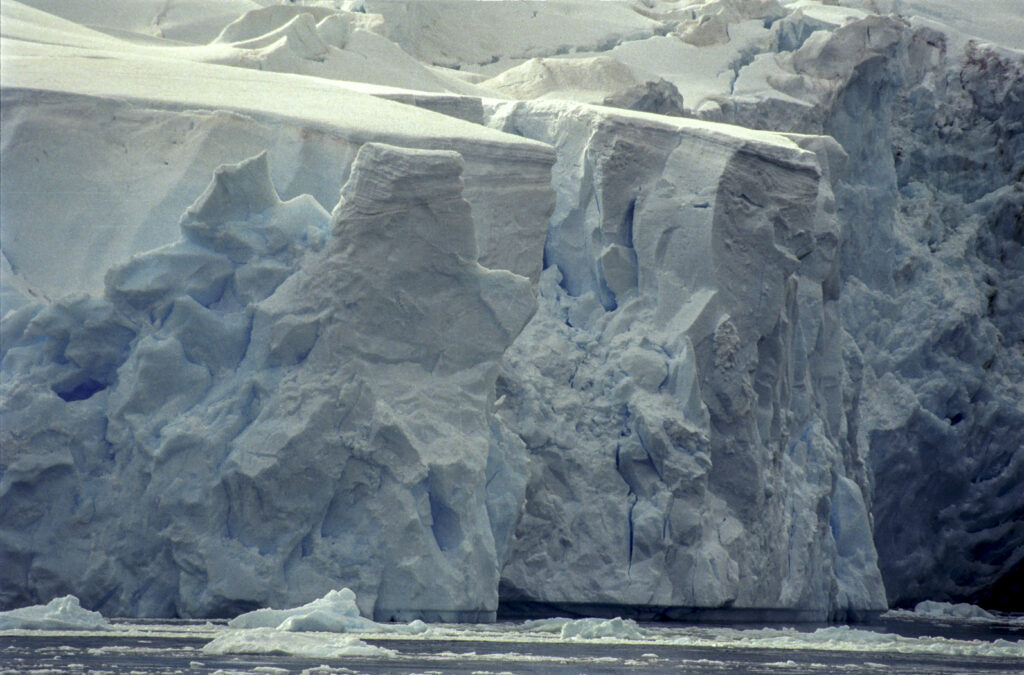
The Thwaites Glacier, when combined with the surrounding area, is responsible for 8% of the present 4.6mm annual global sea level increase.
According to the most recent projections, the West Antarctic Ice Sheet may completely or significantly disappear from the ice pack in the twenty-third century.
Experts have stated that immediate action is now required to assist in slowing down this process.
This week, scientists from the US and the UK will gather at the British Antarctic Survey (BAS) in Cambridge to talk about their discoveries.
To explore if they can uncover more information about the future of the “Doomsday Glacier,” researchers plan to employ a mix of underwater robotics and other approaches.
If it all melted, sea levels would rise by 3.3 meters, resulting in global floods, habitat loss, and an increase in storm frequency.
Only in the UK, places like Hull, Peterborough, Portsmouth, portions of east London, and the Thames Estuary would be vulnerable to flooding.
Dr Rob Larter, from the Science Co-ordination of the ITGC and a marine geophysicist at BAS, said: “Thwaites has been retreating for more than 80 years, accelerating considerably over the past 30 years.”
“And our findings indicate it is set to retreat further and faster.”
“There is a consensus that Thwaites Glacier retreat will accelerate sometime within the next century.”
“
However, there is also concern that additional processes revealed by recent studies, which are not yet well enough studied to be incorporated into large-scale models, could cause retreat to accelerate sooner.”
Dr. Ted Scambos, US science co-ordinator of the ITGC and glaciologist at the University of Colorado, added: “It’s concerning that the latest computer models predict continuing ice loss that will accelerate through the 22nd century and could lead to a widespread collapse of the West Antarctic Ice Sheet in the 23rd.
“Immediate and sustained climate intervention will have a positive effect, but a delayed one, particularly in moderating the delivery of warm, deep ocean water that is the main driver of retreat.”

