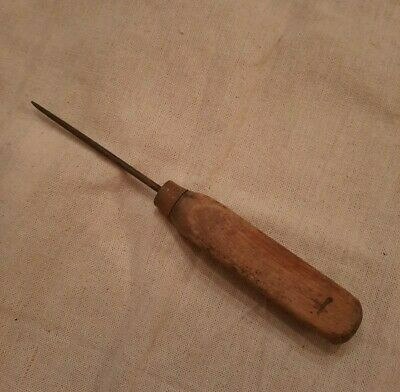
In a world dominated by modern technology and sleek designs, there’s something undeniably captivating about vintage tools. They carry with them a sense of history, craftsmanship, and purpose that is often missing in contemporary objects. One such tool that might catch your eye is the item in the image—a simple, weathered instrument with a wooden handle and a sharp metal point. But what exactly is it?
This old tool is an awl, a traditional hand tool that has been used for centuries in various crafts and trades. Though it might seem unassuming at first glance, the awl is a vital implement with a rich history and versatile applications.
What is an Awl?
An awl is a pointed tool used to make small holes or indentations in materials such as wood, leather, or metal. The basic design has remained relatively unchanged over the years: a sharp, slender metal shaft (or blade) attached to a comfortable handle, often made of wood, as seen in the image. The handle is typically ergonomic, designed to fit snugly in the palm of the hand, allowing for precise control and pressure when using the tool.
The Purpose and Uses of an Awl
The primary function of an awl is to pierce or scribe. Here are some of the traditional uses:
- Leatherworking: Awls are essential in leather crafting, where they are used to punch holes for stitching, marking patterns, and creating intricate designs. The sharp point allows artisans to control the depth and size of the hole, ensuring consistency in their work.
- Woodworking: In woodworking, an awl is used to create starter holes for screws or nails, preventing the wood from splitting. It is also employed for marking precise points on the wood before cutting or drilling.
- Bookbinding: Awls play a crucial role in the bookbinding process, where they are used to punch holes in paper or leather covers for sewing the pages together. The precision and control offered by the awl are indispensable in this delicate craft.
- General Crafting: Beyond these specialized trades, awls are also used in various other crafting applications, such as creating holes in fabric, plastic, or metal, or even as a tool for prying or scraping.
A Tool of Craftsmanship and Tradition
The simplicity of the awl belies its significance. For centuries, this tool has been a staple in the toolkits of craftsmen, artisans, and tradespeople. Its design has stood the test of time, proving that sometimes, the most straightforward tools are the most effective.
The wooden handle of the awl in the image suggests that it has seen many years of use, likely in the hands of someone who took pride in their craft. The wear and patina on the handle tell a story of countless projects completed, from leather goods to hand-bound books, each one a testament to the skill and dedication of its user.
The Legacy of the Awl
Today, while many tools have become more specialized or have been replaced by power tools, the awl remains a fundamental part of handcrafting traditions. Whether used by a modern leatherworker or a hobbyist bookbinder, the awl continues to be valued for its precision, simplicity, and reliability.
For those who appreciate vintage tools, an old awl like the one in the image is more than just a piece of history—it’s a connection to the past, a reminder of the enduring power of traditional craftsmanship. Whether displayed as part of a collection or used in its original purpose, this tool serves as a symbol of the artistry and skill that have shaped human culture for centuries.
So, the next time you come across an old tool like this, take a moment to appreciate its history and the hands that once wielded it. In the world of craftsmanship, an awl is more than just a sharp point—it’s a sharp reminder of the enduring legacy of human creativity.
