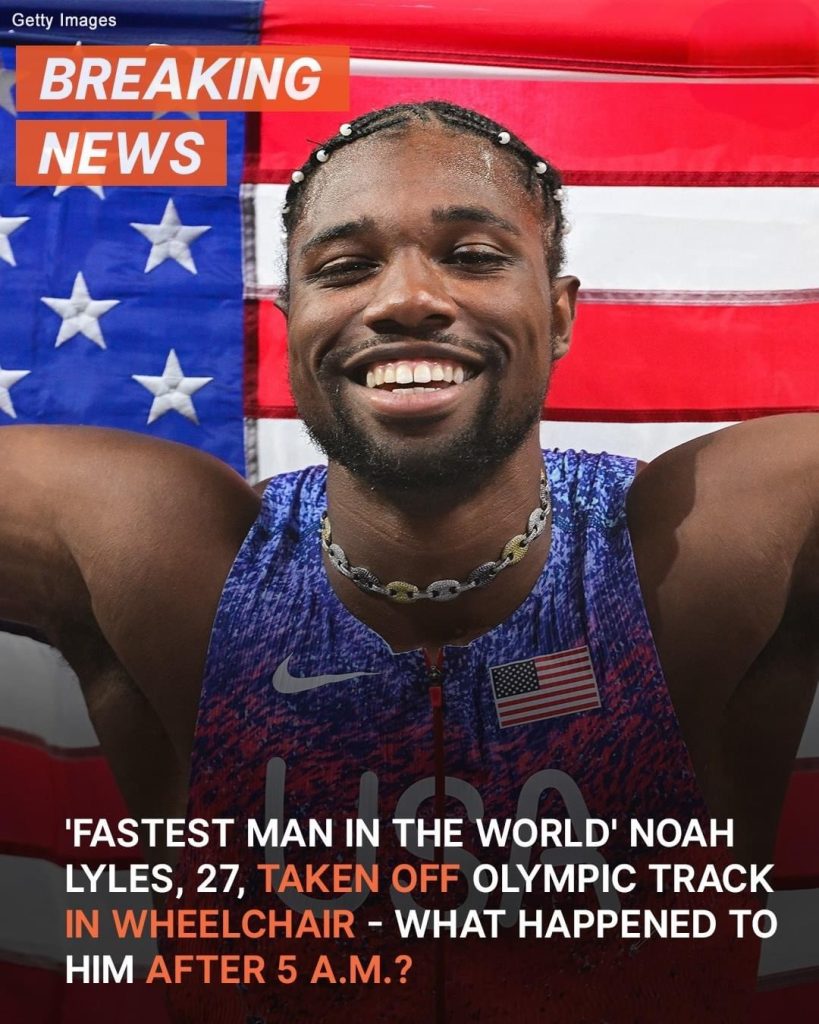
Noah Lyles, often celebrated as the “Fastest Man in the World,” faced unexpected challenges at the 2024 Paris Olympics. Competing in the 200-meter final, Lyles managed to secure a bronze medal, but his performance and subsequent health condition raised concerns, particularly due to a recent COVID-19 diagnosis.
The Race and Its Aftermath On August 8, 2024, Lyles competed in the men’s 200-meter final, where he finished in third place. However, after crossing the finish line, Lyles visibly struggled, ultimately needing a wheelchair to leave the track. This shocking sight left many fans and observers concerned about the athlete’s health.The 27-year-old was promptly attended to by medical staff on the field. After receiving care, Lyles returned to speak to the press, providing insight into his condition and the challenges he faced in the days leading up to the race.
Battling COVID-19Lyles revealed that two days before the final, he tested positive for COVID-19. Despite the diagnosis, he chose to compete, driven by his commitment to represent the U.S. in the Olympics. Recounting his experience, Lyles shared that he woke up on August 6 feeling “horrible.” Recognizing that his symptoms were more severe than typical post-race soreness, he sought medical advice and subsequently tested positive for the virus.“My first thought was not to panic, thinking, ‘I’ve been in worse situations, I’ve run with worse conditions,’” Lyles explained. Despite the positive test, Lyles isolated himself, stayed hydrated, and prepared for his upcoming race. However, the impact of the virus on his performance was evident, both during and after the race.
Health Concerns and Challenges Lyles’ COVID-19 diagnosis was particularly concerning given his pre-existing condition of asthma. The Centers for Disease Control and Prevention (CDC) notes that individuals with asthma are at a heightened risk for severe illness from COVID-19. Despite these challenges, Lyles’ determination to compete showcased his resilience, even as the virus took a toll on his body.Before his COVID-19 diagnosis, Lyles had celebrated a victory in the men’s 100-meter dash on August 4, securing a gold medal. However, the impact of the virus led him to reconsider further participation in the Games. In a post on Instagram following the 200-meter final, Lyles announced, “I believe this will be the end of my 2024 Olympics,” expressing a mix of disappointment and gratitude for the experience.
