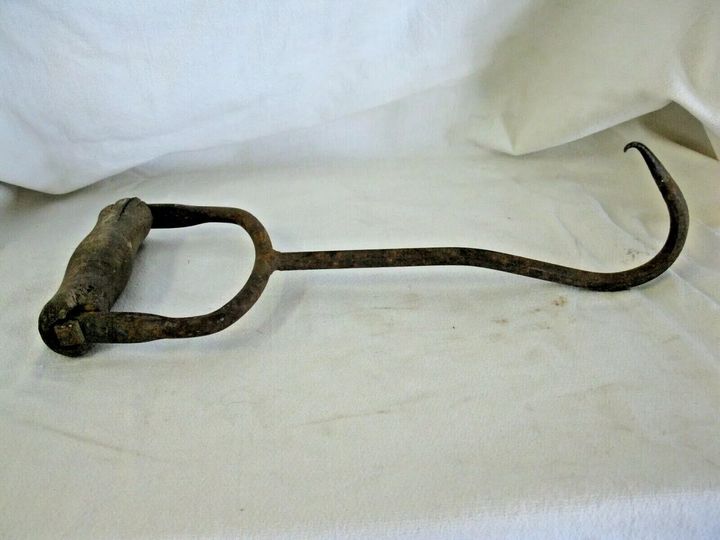
The Legacy of a Timeless Farm Tool
The vintage hay hook, a quintessential tool in agricultural history, embodies a significant chapter in the evolution of farming practices. This seemingly simple device has played a crucial role in hay harvesting, shaping the way farmers worked and paving the way for modern agricultural advancements.
A Historical Overview
The hay hook, often forged from iron or steel, dates back to the 19th century when it became an essential tool in agriculture. Before the advent of mechanized farming equipment, this tool was invaluable for moving and handling hay bales. Its design features a curved, pointed hook that allowed farmers to grasp and maneuver large quantities of hay with ease.
During a time when farming was labor-intensive, the hay hook was indispensable for stacking hay in barns and transporting it from fields. It enabled farmers to efficiently manage their hay, which was crucial for feeding livestock through the winter months.
Usage in Agriculture
The hay hook’s primary function was to facilitate the handling of hay. Its design, with a sharp, curved hook, allowed users to lift and carry heavy bales with minimal effort. This tool was particularly effective for:
- Stacking Hay: The hook made it easier to lift and stack bales, reducing the physical strain on farmers.
- Transporting Hay: Farmers used the hay hook to load hay onto wagons or carts for transport, streamlining the process of moving feed from the fields to storage areas.
- Handling Large Quantities: By using the hay hook, farmers could efficiently manage large quantities of hay, ensuring a steady supply of feed for their animals.
Legacy and Impact
Though modern technology has largely replaced manual tools with advanced machinery, the hay hook’s legacy endures. It symbolizes a bygone era of farming, reflecting the hard work and ingenuity of those who relied on it. Today, vintage hay hooks are often sought after by collectors and enthusiasts, valued for their craftsmanship and historical significance.
In addition to its practical use, the hay hook represents the evolution of agricultural tools and the transition to mechanized farming. It serves as a reminder of the labor and dedication that went into traditional farming practices, offering a tangible connection to the past.
The hay hook’s influence extends beyond its functional role; it has become a symbol of agricultural heritage, celebrating the hard work and innovation that shaped modern farming. Its place in history highlights the enduring spirit of agriculture and the tools that have helped sustain it through the ages.
