All blue-eyed people have one thing in common – aside from having blue eyes.
It’s the second most popular eye colour in the world and the shade is believed to have originated around 6,000 to 10,000 years ago.
The widespread iris coloration apparently started due to a genetic mutation as, originally, all humans had brown eyes – in different shades.
There are plenty of other interesting things about blue-eyed people too.
For example, they are more sensitive to light – if you have more melanin in the iris, it means you have more protection in the back of the eye from UV radiation and blue light damage, as per Auckland Eye.
So as people with blue eyes have less melanin than other colors, photophobia (abnormal sensitivity to light) is usually more common.
While this may sound negative, there are many positives to having blue eyes.
A study by Louisville University professor Joanna Rowe found that people with this eye shade are more likely to be better strategic thinkers, as reported by the Daily Mail.
The professor clarifies: “It is just observed rather than explained. There’s no scientific answer yet.”
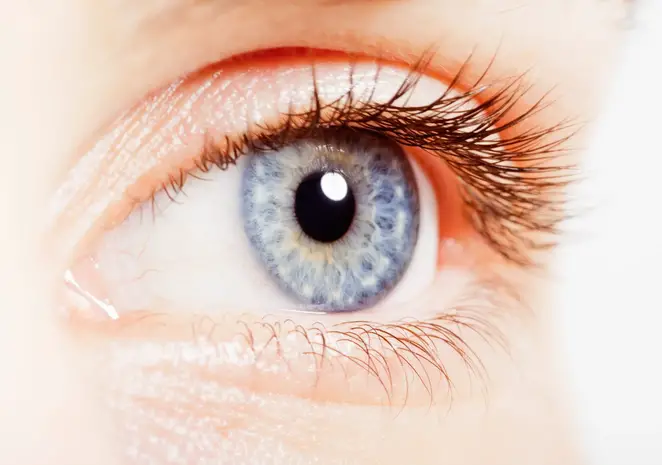
Many celebrities with blue eyes have bright minds, including Stephen Hawking, Alexander Fleming, and Marie Curie.
But most interestingly, all blue-eyed people have one particular thing in common – and people have been left surprised by the news.
One person writes: “I had no idea! Fascinating…”
Another jokes: “Spoiler alert: all their eyes are blue.”
Recently, a gene has been identified that causes blue eyes, and it’s called HERC2.
This gene switches off OCA2 – which results in different shades of brown eyes – and determines the amount of brown pigment melanin we make.
Professor Hans Eiberg, from the University of Copenhagen’s Department of Cellular and Molecular Medicine, explains: “Originally, we all had brown eyes. But a genetic mutation affecting the OCA2 gene in our chromosomes resulted in the creation of a ‘switch’, which literally ‘turned off’ the ability to produce brown eyes.”
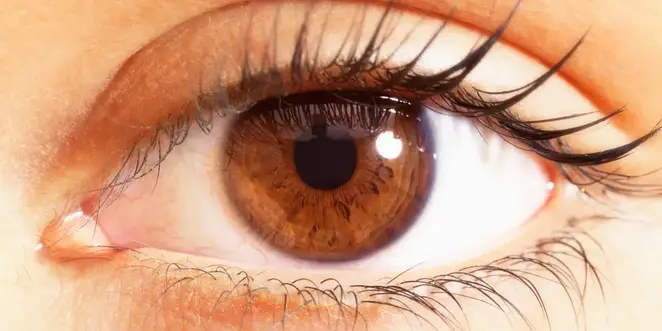
It is believed to have originally begun when humans first migrated from Africa to Europe, The Independent details.
The University of Copenhagen study suggests that all blue-eyed people are descendants of one person.
Although it remains a mystery who first started this initial mutant gene, the fact every blue-eyed person has this mutation is pretty compelling evidence.
Professor Eiberg says in the report that the research into the genetic mutation of people with blue eyes ‘simply shows that nature is constantly shuffling the human genome, creating a genetic cocktail of human chromosomes and trying out different changes as it does so’.
