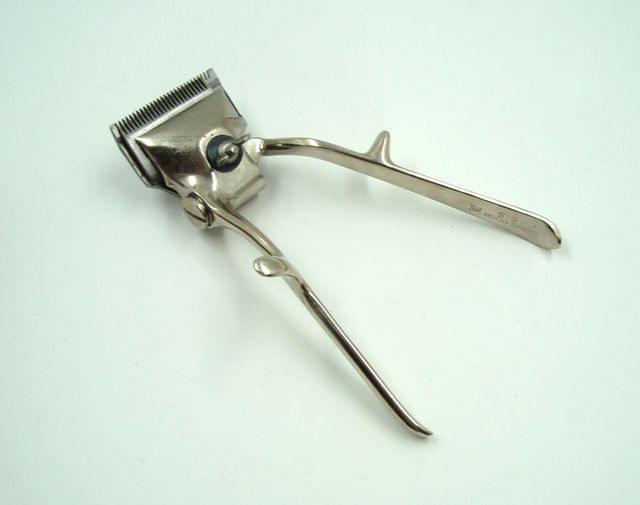
The vintage hand clipper, also known as the manual hair trimmer, dates back to the late 19th century. Before electric clippers became widespread, these manually operated tools were essential for barbers and individuals who wanted to maintain a clean and tidy haircut.
Design and Mechanism
Hand clippers were made of high-quality steel, ensuring durability and longevity. They featured two rows of sharp, comb-like teeth that moved against each other when the handles were squeezed together. This scissor-like action allowed for a clean and even cut, making them the preferred choice for professional barbers and home users alike. The ergonomic design ensured a comfortable grip, enabling extended use without causing hand fatigue.
Usage and Popularity
During the late 19th and early 20th centuries, hand clippers were the primary tool for hair cutting. Barbers relied on them to provide consistent and stylish haircuts, and many households owned a pair for personal grooming. The ease of use and maintenance made them accessible to a wide audience. Users appreciated the control and precision these tools offered, allowing for various hair lengths and styles.
Decline and Legacy
With the advent of electric hair clippers in the 1920s, the popularity of hand clippers began to wane. Electric models offered quicker and more effortless haircuts, appealing to the increasingly fast-paced lifestyle of the modern world. However, hand clippers never entirely disappeared. They remained a staple in many barbershops and homes, particularly in areas where electricity was unreliable or unavailable.
Despite the rise of electric alternatives, vintage hand clippers have left a lasting legacy. Collectors and enthusiasts value these tools for their craftsmanship and historical significance. Barbers and hairstylists appreciate the skill and technique required to use hand clippers effectively, and some even prefer them for their precision and control.
Modern Resurgence
In recent years, there has been a resurgence of interest in vintage hand clippers. The growing trend of traditional barbering and the appreciation for artisanal tools have brought these classic grooming implements back into the spotlight. Many modern barbers incorporate hand clippers into their practice, celebrating the artistry and heritage they represent.
Conclusion
The vintage hand clipper/trimmer stands as a testament to the ingenuity and craftsmanship of a bygone era. Its impact on the grooming industry is undeniable, paving the way for the tools and techniques used today. While electric clippers may dominate the market, the enduring legacy of the hand clipper continues to be celebrated by collectors, barbers, and grooming enthusiasts around the world.
