
Everyone has their favorite way of serving up steak: rare, medium, or well done.
But before it’s garnished up on a plate, it can look pretty unappetizing while still in the shops or butchers.
You may have noticed a red liquid oozing out of the steak and presumed it was blood, well you’d be wrong.
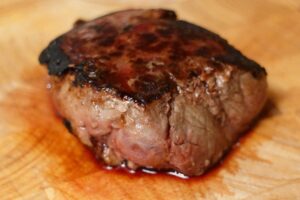
People are reacting on social media after discovering what the pinkish-red liquid is.
“I was today years old when I learned that the red liquid in rare steak isn’t blood,” one X (formerly Twitter) user writes.
Another adds: “I did not know that!”
A third person says: “That’s worse, I don’t even know what that is.”
“This is upsetting,” somebody else comments.
So, what exactly is the pinkish-red liquid oozing out of the steak? Let’s start at the beginning…
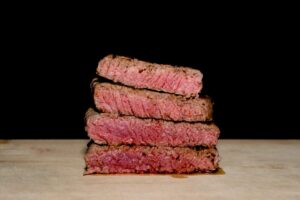
During the slaughtering process, virtually all of the blood is drained out, resulting in very little blood, even with the freshest steaks.
So when you see a steak all packaged up on display with the bloodlike liquid, you’re actually looking at purge.As explained by Bearded Butchers: “All meat is around 75% water that is held in the cells of the muscle tissue. Frozen and then thawed meat will often have purge in the package.
“When water becomes ice, it forms crystals. The ice crystals cut the meat cells, and when the meat defrosts, water and myoglobin leak out.”
Many cuts of steak labeled as fresh in-store have been frozen or partially frozen during transportation or storage.
From this, you’ll find many cuts of meat are packaged with an absorbent pad, intending to soak up the purge.
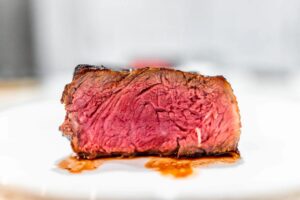
Steak School explains that older animals usually have more muscle tissue meaning more myoglobin.
Cows tended to be harvested at an older age than pigs, so the liquid that leaks from steak appears more bloodlike than the liquid that seeps from pork.
The site adds: “When it comes time to cook your steak, the myoglobin will darken as it’s exposed to heat and the meat loses its moisture. That’s why a rare steak looks ‘bloody’ and a well-done steak takes on a grey color.”
Bearded Butchers says purge should be treated like raw meat, with the site advising people ‘to avoid packages of meat that have excessive amounts of purge.’
The artisan butchery website states: “When a package of meat has a lot of purge in it, the meat has lost flavor and tenderness. The more purge, the less moisture in the meat, and the less tasty it will be.
“That’s why we let meat rest after cooking – it allows the juices to reabsorb into the meat.”
