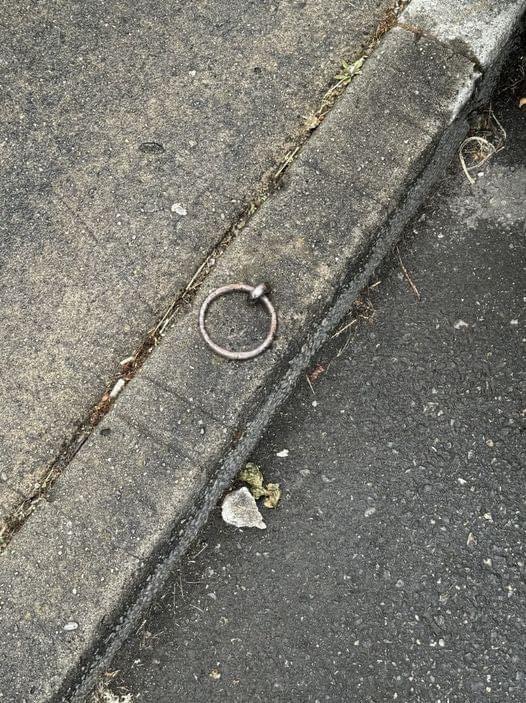
Do you recall the carefree summer days of the 60s when children played in the streets and bicycled around? In those days, people were more connected to their neighbors, and history was visible around every street corner. In both small towns and large cities, one could accidentally come across peculiar objects that are installed into the sidewalks-metal circles made of iron or brass. To many, they appeared to be relics of a lost age, evoking images of horse-drawn carriages and a more leisurely world.
These horse rings, which are from the 1800s, had a functional use in a time when horses were the main source of transportation. Picture streets full of carriages, the sound of horses’ hooves as they were tied to these rings while their owners went about their business. Previous articles in The Register-Guard from 1978 indicate that these rings could be from the early
1900s. Regardless of their exact age, they provided residents with a convenient means of housing their
horses, indicating that cities were once built with horses in mind.
These rings have now become valuable historical relics in Portland, Oregon. Before the late 1970s, they were usually taken down for protection when sidewalks were under construction. However, in 1978, there was a complaint from a Portland resident and this made people appreciate these rings again. City Commissioner Connie McCready countered this by permitting the homeowners to request for the replacement of these rings at a cost of $5 in order to keep a part of history.

These horse rings not only served the practical purpose but also held certain cultural importance.
These denote an age where transport was a shared undertaking and cities were laid out to the needs of a society that revolved around horse-drawn carriages.
The preservation of these rings is an indication of the society’s understanding of history and appreciation of the urban heritage.
These rings have become popular in Portland in the recent past and have been adopted by the city as part of its culture. People have begun to attach model horses to the rings and create art objects that can be touched, attracting people’s attention and making them discuss the topic of the city. This movement, known as The Horse Project, started in 2005 in the Woodstock neighborhood and has evolved into an annual event that transforms these functional objects
into art objects that represent the community.
Discussing horse rings is as if one is telling stories about the good old days; it is a method of cherishing the little things that truly define the towns and cities we live in. These rings are not mere pieces of metal cast in concrete; they are chroniclers of a period when time was slow and the world was kinder.

The existence of horse rings is a proof that there are good aspects of urban heritage. It demonstrates how people can pay tribute to their heritage and at the same time offer people a fun and optimistic environment. This desire to preserve historical aspects of the city not only enhances our knowledge of history but also contributes to our sense of identity and belonging.
Picture this: It is a historical street in Portland and the sun is setting and the shadows are falling on the pavement. You see a small iron ring set into the sidewalk. When you stop, one can almost listen to the sound of horses’ hooves and the whisper of people from the previous century. These rings which were once used for chaining horses have been turned into time portals that will allow you to travel back in time and behold the history that forms the current world.
This is where nostalgia and historical facts can be combined to be able to appreciate such simple yet meaningful objects. Horse rings make us realize that the tales are hidden in every corner of our cities and these tales are the link between us and our past which should be cherished.
