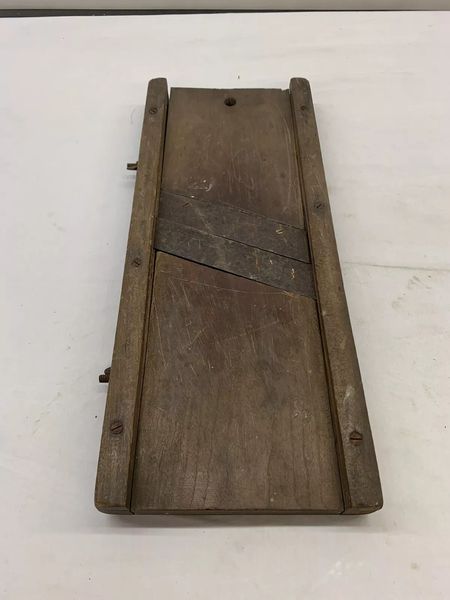
History of the Vintage Cabbage Slaw Cutter
The vintage cabbage slaw cutter, also known as a kraut cutter, has a rich history rooted in the culinary traditions of Europe. Emerging in the 19th century, these tools became essential in households, particularly in Germany and Eastern Europe, where fermented cabbage dishes like sauerkraut and coleslaw were dietary staples. The slaw cutter made its way to America with European immigrants, becoming a kitchen staple in many homes by the early 20th century.
Usage of the Cabbage Slaw Cutter
The primary function of the cabbage slaw cutter is to finely shred cabbage for slaws and fermented dishes. Typically, it consists of a wooden frame with one or more sharp metal blades mounted horizontally. Users place a head of cabbage on the cutter and slide it back and forth, allowing the blades to slice the cabbage into thin strips. The design varies, with some models featuring adjustable blades to control the thickness of the slices.
Using a cabbage slaw cutter requires a bit of manual effort but is highly effective. Its simplicity and efficiency make it ideal for processing large quantities of cabbage quickly, essential for preparing sauerkraut or coleslaw for family gatherings or long-term storage. This tool ensures uniform slices, which are crucial for the even fermentation of sauerkraut and the consistent texture of coleslaw.
Legacy of the Cabbage Slaw Cutter
The cabbage slaw cutter’s legacy endures in both culinary history and modern kitchens. It symbolizes a time when food preparation was more hands-on and community-oriented. The act of shredding cabbage with a slaw cutter often involved family members working together, reflecting a communal approach to food preparation and preservation.
In contemporary times, while modern kitchen appliances have largely replaced manual tools, the vintage cabbage slaw cutter remains cherished by enthusiasts of traditional cooking methods and collectors of kitchen antiques. It represents a connection to heritage, sustainability, and the slow food movement, which values traditional techniques and the quality of homemade foods.
Collectors and culinary historians prize these tools for their craftsmanship and historical significance. Many vintage slaw cutters are beautifully constructed from hardwood and metal, showcasing the durability and aesthetic appeal of 19th and early 20th-century kitchenware. They serve as a tangible link to the past, reminding us of the ingenuity and practicality of earlier generations.
Conclusion
The vintage cabbage slaw cutter, with its rich history, practical usage, and enduring legacy, remains a beloved kitchen tool. It highlights the traditions of food preparation that have shaped our culinary heritage and continues to be valued for its simplicity and effectiveness. Whether used for its intended purpose or displayed as a piece of history, the cabbage slaw cutter stands as a testament to the timeless nature of well-crafted tools and the enduring appeal of traditional cooking practices.
