We just received our third letter home from the school nurse letting us know that lice has been reported in several grades at our school. So if you clicked here, you’re probably feeling pretty lousy…literally. (Guess we all know the origins of the word “lousy” now.) Try not to freak out. Stay calm. You’re not the first and surely not the last person that has had to deal with lice. And if you ask around, everyone that has had it will tell you, that this too shall pass! Try to have a sense of humor. It will go a long way during the next two weeks.
We asked lice expert, Lena Gorelik of Lice Free Noggins, what we need to know about these lousy critters. We had a lot of questions. Here’s what we learned…starting with what exactly lice are:
What Are Lice?
“Head lice are tiny wingless parasites that feed off human blood,” Lena explained. “They develop in three stages, nit to nymph to full-grown louse.”
What Are Nits?
Nits are head lice eggs. Female lice lay nits on hair shafts and a cement-like substance holds them in place. They take about 8 to 9 days to hatch. Once nits hatch, they leave their shells behind. These shells are also called nits. “Now you can see why nits are sometimes misidentified as dandruff!” Lena said.What Do They Look Like?
The average size of a grown louse is 2-3mm, about the size of a sesame seed. Lena pointed out, “Adult lice and nymphs (baby lice) are grayish white or tan in color and are pretty camouflaged in the hair.” After a feeding, a louse’s abdomen fills with blood, giving them a brownish tinge in color.
How Do You Get Lice…Can They Jump Onto Your Head from Someone Else’s Head?
“No,” Lena smiled, “head lice do NOT jump, hop, or fly; they crawl. They spread mostly through direct head to head contact. It’s also possible, although unlikely, to get lice from sharing hair accessories like brushes, hair clips, hats, scarves, pillows, blankets.
Where Do They Appear?
The nits (lice eggs) appear as tiny brown, tan, yellow or white tear-drops firmly attached to the hair shaft. The eggs are about the size of a knot in a piece of thread, and if are unhatched are usually found within a 1/4 inch from the scalp.
“A healthy louse likes its home,” Lena explained, “it clings on to an individual’s hair as this is where their home is, and will not willingly leave to go onto an inanimate object. When a louse is found on an object, it is likely in the process of dying.”
A louse. Notice its big belly filled with eggs.
Does Lice Always Make Your Head Itchy?
“While most people associate head lice with an itchy scalp,” Lena told us, “sometimes head lice produce no symptoms at all. The itching associated with lice is actually caused by an allergic reaction to the parasites saliva. Only about 60% of people will develop an itchy scalp.
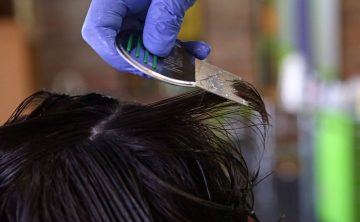
Ok, How Can We Get Rid of Them…Quickly?!
“Unfortunately,” she said, “there are no shortcuts to treating head lice. Get a professional grade nit comb and comb hair meticulously. And a conscientious follow-up is a must.You have to comb meticulously using a professional stainless steel nit comb and a non-toxic, pesticide-free product. If you choose to go the chemical route, read the instructions carefully, as they may pose a health risk in some individuals, especially children with asthma. Many of these products involve multiple treatments and still require thorough combings.
“Over the counter medications, such as Nix and Rid do not kill nits (eggs). As a matter of fact, there is no product on the market which is strong enough (toxic enough) to penetrate through the shell of a nit.”
“If you don’t comb out properly,” Lena pointed out, “the remaining nits start to hatch shortly after and the infestation continues.” Which can leave parents frustrated and confused.
This is when we choose to turn the baton over to a lice professional like Lice-Free Noggins.
If you tried unsuccessfully to treat your family –or of the whole process sounds entirely too daunting, professional lice removal is probably not as expensive as you think. Prices for a head check start at only $35 and treatments start at $150. Plus, you can have it done in the comfort of your home while you enjoy a glass of wine and turn on a movie for the kids while someone else does that hard work!
