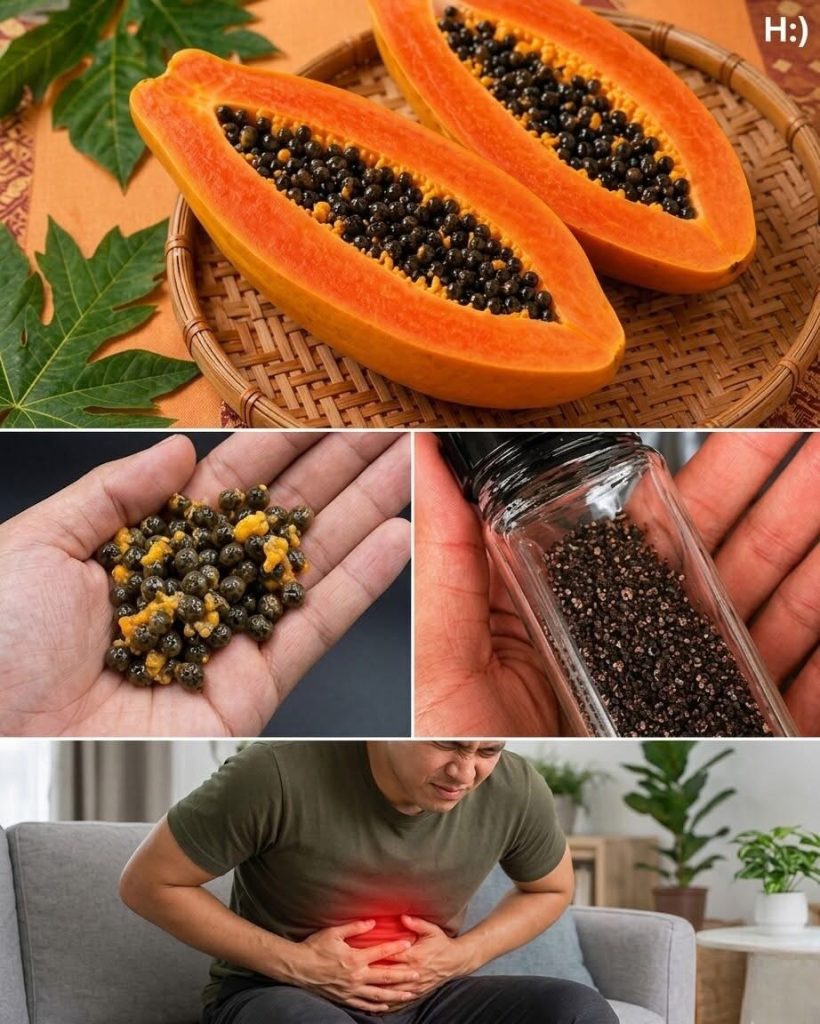
Most people eat a papaya for its soft, sweet orange flesh and then, almost automatically, scoop out the cluster of small black seeds and throw them away without a second thought. They are often seen as waste—messy, bitter, and unnecessary—yet this habit overlooks the fact that these tiny seeds are actually packed with natural compounds that have attracted growing interest in nutrition research and traditional wellness practices. While the fruit itself is widely appreciated for its vitamins, fiber, and hydration benefits, the seeds represent a far less explored part of the plant that contains enzymes, oils, and bioactive substances. In many traditional cultures, nothing from the papaya is considered truly useless, and the seeds in particular have long been dried, crushed, or used in small quantities for their intense flavor and potential functional properties. Modern curiosity has begun to revisit these traditional uses, not as miracle claims, but as a reminder that whole foods often contain more complexity than what is commonly consumed on the surface.
One of the most discussed aspects of papaya seeds is their potential role in supporting digestion. The seeds contain natural enzymes, including compounds similar to those found in the fruit itself, which may assist in breaking down proteins and easing the digestive process. This is particularly relevant after heavy meals or diets rich in protein, where the digestive system must work harder to process food efficiently. While the seeds are not a replacement for medical treatments or digestive therapies, they are often explored as a supportive dietary addition in small amounts. Their bitter, slightly peppery taste reflects the presence of these concentrated compounds, which is why they are not typically eaten in large quantities or in their raw form like the fruit. Instead, some people choose to dry them and grind them into a powder, using them sparingly as a seasoning or spice-like addition to food. This method reduces their intensity while still allowing them to be incorporated into the diet in a controlled way.
Beyond digestion, papaya seeds are also noted for their antioxidant content, which plays a role in helping the body manage oxidative stress. Oxidative stress occurs when there is an imbalance between free radicals and the body’s ability to neutralize them, and over time it can contribute to cellular wear and general decline in function. Antioxidants are compounds that help support the body’s natural defense systems against this process, and they are found in many fruits, vegetables, and seeds. Papaya seeds contain a variety of these naturally occurring compounds, which is why they have drawn attention in nutritional studies and traditional health systems alike. While research is still ongoing and not all effects are fully understood, the presence of these substances adds to the nutritional interest surrounding seeds that are usually discarded. It also reinforces the broader idea that different parts of fruits often contain different concentrations of beneficial compounds, and that what is typically eaten is only a fraction of what nature provides.
In some traditional practices, papaya seeds have also been associated with liver support and internal cleansing functions, although scientific evidence in this area remains limited and not fully conclusive. These uses are often based on long-standing cultural experience rather than modern clinical trials, which means they should be viewed with caution and not overstated. The liver is a highly complex organ responsible for detoxification, metabolism, and processing nutrients, and while diet can influence its function, no single food or seed can replace its natural biological processes. Nevertheless, the continued interest in papaya seeds reflects a broader pattern in which traditional knowledge and modern research sometimes overlap, prompting further investigation into how plant compounds interact with the human body. This intersection of tradition and science is often where new nutritional insights begin to emerge, even if conclusions take time and require careful validation.
Despite their potential benefits, papaya seeds are not something that should be consumed in large quantities or treated as a daily health supplement without moderation. Their strong, bitter taste is a natural indication of their potency, and like many concentrated plant-based substances, balance is important. Excessive intake of any bioactive food component can lead to unwanted effects, which is why most uses suggest only small amounts if they are included in the diet at all. Some people prefer to experiment with them lightly, incorporating a pinch of dried and ground seeds into smoothies or spice blends, while others choose to avoid them entirely due to their intensity. This variability highlights an important principle in nutrition: beneficial compounds are not always about quantity, but about appropriate use within a balanced diet. Understanding how to respect the strength of natural ingredients is often more important than simply adding them for novelty.
In the end, papaya seeds serve as a simple reminder that what is commonly discarded is not always without value. They represent a part of the fruit that is often overlooked, yet contains a concentration of compounds that continue to interest both traditional practices and modern nutritional science. While they are not a miracle food and should not be treated as a cure or essential dietary requirement, their existence encourages a broader awareness of how whole foods can be more complex than they appear. Sometimes, the most ignored parts of natural foods carry subtle properties that invite curiosity rather than dismissal. Whether used, studied, or simply observed, papaya seeds highlight an important idea in nutrition and health: value is not always found in what is most consumed, but often in what is most easily overlooked.
